Infrastructure that holds up, without the babysitting.
Infrastructure that holds up under real traffic and doesn't require a specialist to keep running. We design cloud architecture and the pipelines that ship changes to it safely.
Cloud that runs itself, mostly
Good infrastructure is the kind you stop thinking about. We design it to handle real traffic, ship changes safely, and tell you when something's wrong before it becomes an outage.
Start a projectArchitecture that fits your load
Automated, repeatable deploys
Observability from day one
Infrastructure as code
Cost and security, continuously

Fewer pages, lower bills
Reliability and cost aren't a trade-off.
Systems get expensive and fragile at the same time, usually from the same neglect. We tune both together: right-sized resources, automated scaling, and clean pipelines that cut the surprise outages and the surprise invoices at once.
How it works
From audit to infrastructure you can trust.
Assessment & goals
- Reviewing your current infrastructure and pain points
- Understanding traffic patterns, growth, and constraints
- Setting targets for reliability, cost, and performance
Architecture & design
- Designing cloud architecture sized to your real load
- Choosing managed services over undifferentiated heavy lifting
- Planning for scaling, failover, and recovery
Infrastructure as code
- Defining environments in version-controlled code
- Making environments reproducible and reviewable
- Removing manual, one-off server changes
CI/CD pipelines
- Building automated test and deployment pipelines
- Making releases safe, fast, and reversible
- Adding gates so broken changes don't reach production
Observability & security
- Setting up monitoring, logging, and alerting
- Running cost, performance, and security reviews
- Hardening access and secrets management
Handoff & ongoing support
- Documenting the system so your team can run it
- Tuning cost and performance as usage changes
- Staying on for incident support where you need it
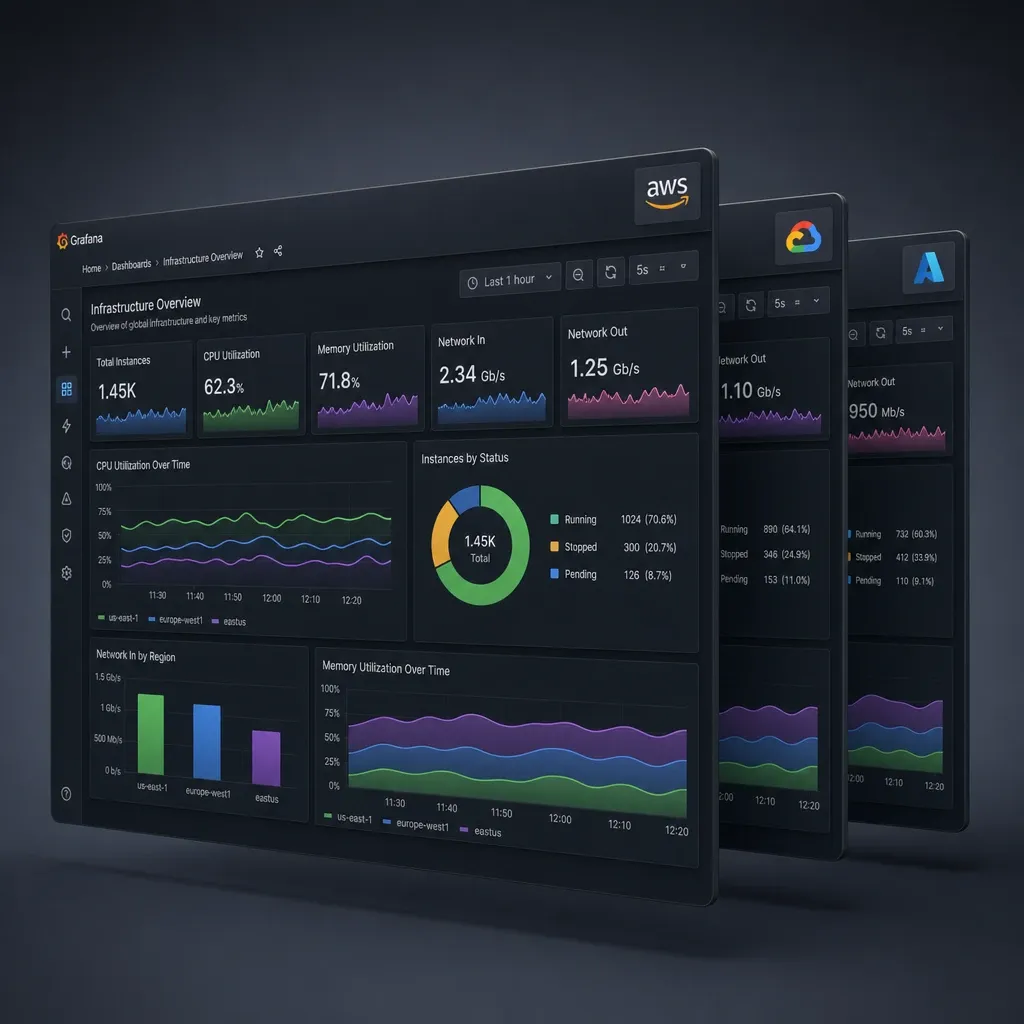
Case study
A migration that cut the bill and the pages at once.
A growing team was firefighting outages and overpaying for idle capacity. We moved them to a right-sized, autoscaling architecture defined in code, with real monitoring and a proper deploy pipeline. The firefighting stopped.
41%
lower monthly cloud spend
90%
fewer out-of-hours incidents
min
deploys measured in minutes, not hours
What clients say
For the first time we trust our own infrastructure. Deploys are boring, the bill makes sense, and we hear about issues from a dashboard instead of an angry customer.
Rufus
Head of Engineering, Logistics company

Tell us where it hurts